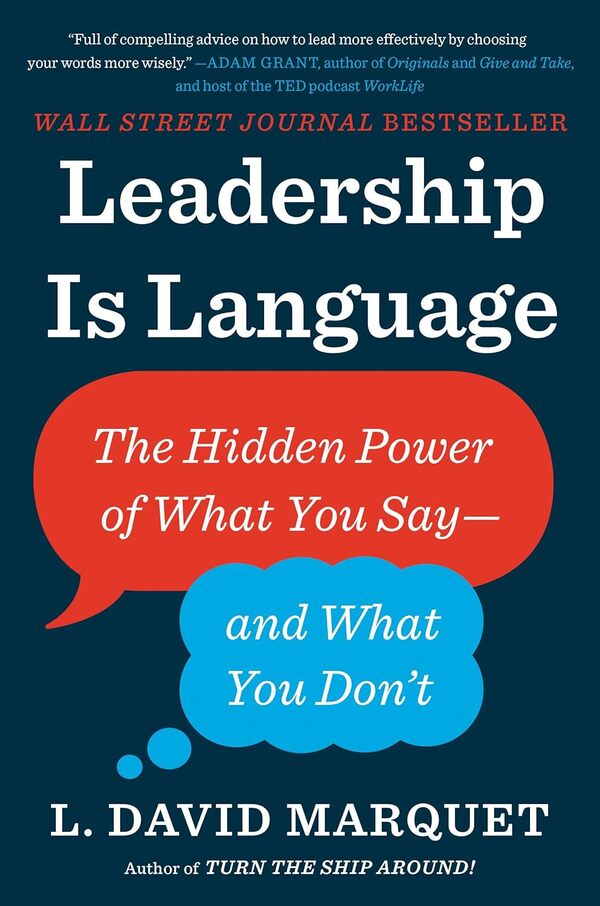
Command – Leadership – Management: Ein integratives Führungsmodell für militärische und zivile Organisationen
[Gruppe. Interaktion. Organisation. Zeitschrift für Angewandte Organisationspsychologie (GIO), 12.03.2026, Patrick Hofstetter, Florian Demont und Sarah von Felten]
Das 2023 entwickelte und im Januar 2025 in der Strategie der Gruppe Verteidigung offizialisierte Führungsmodell Command – Leadership – Management ist nun erstmals in einem peer-reviewten Zeitschriftenartikel systematisch dargestellt und theoretisch eingeordnet. Der Beitrag beschränkt sich dabei nicht auf eine Modelldarstellung. Im Sinne einer induktiv-konzeptionellen Fallstudie argumentiert er explizit, weshalb und wie sich dieser Ansatz aus dem militärischen Kontext auch auf zivile Organisationen übertragen lässt. Was in der Schweiz aufgrund der engen gesellschaftlichen Einbettung der Armee vielfach selbstverständlich erscheint, muss im umliegenden Ausland erst plausibilisiert und begründet werden. Genau diesen Nachweis versucht der vorliegende Artikel zu leisten.
Link (open access): https://link.springer.com/article/10.1007/s11612-026-00870-3
Evolution of Russian Tactics
[YouTube: War Archive, 26.12.2025]
By breaking down the Russian invasion of Ukraine into five phases, War Archive shows how the Russian Armed Forces adapted over time. In the beginning they attempted a decapitation strike aimed mainly at the capital Kyiv in what War Archive calls a “Modernized Blitzkrieg”. As this failed due to unexpected Ukrainian resistance and a lack of air superiority, in May 2022 the Russian armed forces shifted their approach to rely less on manoeuvre and more on an artillery “Wall of Fire”. These artillery-enabled advances then ground to a halt as Ukrainian deep-strikes (such as with HIMARS) targeted the logistics needed for such high artillery firing rates. Having attempted to outmanoeuvre and outgun their opponent, in late 2022 the Russians then shifted their focus to relying on infantry assaults mostly constituted by Wagner troops. As Wagner was disbanded, the regular Russian Armed Forces incorporated Wagner’s infantry-heavy approach and added limited mechanised elements to it. Since mid-2024, they now rely on infiltrating Ukrainian-held positions in small teams. Whereas most teams are quickly eliminated, sheer numbers mean that some are inevitably successful in eroding Ukrainian defences over time, as seen in Russia’s capture of the centre of Pokrovsk in December 2025. Apart from this analysis, War Archive posts other videos where he analyses specific battles of the War in Ukraine in detail. Most notably, his video about the Battle for Hostomel Airport allows the viewers to study how Russian forces attacked and why their plan of enabling an air bridge to Hostomel ultimately failed.
Link Tactics: https://www.youtube.com/watch?v=A6MfjV2vsdg
Link: Hostomel: https://www.youtube.com/watch?v=r0Ji7KqqEqg
From Relic to Relevance: Why Obsolete Weapons Still Win Modern Wars
[Modern War Institute, 13.11.2025, Lukáš Dyčka]
The Bundeswehr retired its Gepard air defence systems in 2010. 12 years later Germany exported Gepard systems to Ukraine, where they proved very capable of defending against Russian Shahed/Geran drones. This article highlights how «obsolete» platforms «may be one adversary or one type of terrain away from renewed relevance.» With European armed forces facing the possibility of a long war and hence being in need of redundancies and deep stockpiles, the author wants armed forces to stop calling weapon systems obsolete and to «Start asking what problems they can still solve».
Link: https://mwi.westpoint.edu/from-relic-to-relevance-why-obsolete-weapons-still-win-modern-wars/
Le Polemarque
[La Chouette Librairie]
Une librairie en ligne française moins connue, la Chouette Librairie, propose une sélection ciblée d’ouvrages en études stratégiques, histoire militaire, éthique militaire et leadership. Son catalogue comprend des œuvres influentes de figures telles que Guisan, Rommel et Fuller, entièrement en français.
Link: https://www.lachouettelibrairie.com/editeur/le-polemarque/
Is Europe Too Soft to Fight?
[War on the Rocks, 28.10.2025, Florence Gaub, Roderick Parkes]
Gaub and Parkes warn that as governments see their population as unwilling and too soft to fight, they risk a self-fulfilling prophecy. They argue that instead of a fixed category, the «will to fight» should be treated as societal potential that can be both suppressed or cultivated.
Link: https://warontherocks.com/2025/10/is-europe-too-soft-to-fight/
The Case for Treating Drones as Ammunition
[War on the Rocks, 21.11.2025, Zachary Griffiths, Jeff Ivas]
Griffiths and Ivas argue that the US Army will not scale small drones successfully if it continues to manage them like durable equipment. Drawing on Ukraine’s high consumption rates and rapidly growing production, they frame small quadcopters and first-person view drones as inherently expendable, closer in cost and turnover to mortar rounds than to “aircraft”. The author’s proposal is straightforward: classify small aerial drones as conventional ammunition, switch from brand-based procurement to role-based “drone families” (recon, FPV, etc), standardise controllers, and use simulators in addition to live drones to lower drone attrition during training.
Link: https://warontherocks.com/2025/11/the-case-for-treating-drones-as-ammunition/
Über das «Update Führung»
Das Update Führung ist eine wiederkehrende Rubrik des Newsletters Leader’s Digest. Dieser Newsletter entsteht in Kooperation des Leadership Campus der Schweizer Armee und der Dozentur Führung und Kommunikation der Militärakademie an der ETH Zürich. Wenn Sie Leader’s Digest noch nicht abonniert haben, finden Sie unter folgendem Link weitere Informationen sowie das Formular zur Anmeldung.
Falls Sie Lesenswertes zu Command, Leadership oder Management entdecken, würden wir uns freuen, wenn Sie dies mit uns teilen. Gerne nehmen wir Tipps für die kommende Ausgabe von Leader’s Digest via leadersdigest@leadershipcampus.ch entgegen.